Comprehensive technical documentation, testing methods, quality standards, and installation guidelines for all our brick products. Your complete reference for specifications and best practices.

Our commitment to quality extends beyond manufacturing to providing complete technical support for architects, engineers, contractors, and builders. We offer detailed technical documentation, testing data, and application guidelines for all our products.
This technical resources section provides everything you need for proper specification, installation, and maintenance of our brick products, ensuring optimal performance and longevity in your construction projects.
Comprehensive information on national and international standards followed in our manufacturing process.
Detailed procedures for testing brick properties including strength, absorption, and durability.
Complete technical data sheets with performance parameters for all our brick products.
Step-by-step installation procedures and best practices for optimal results.
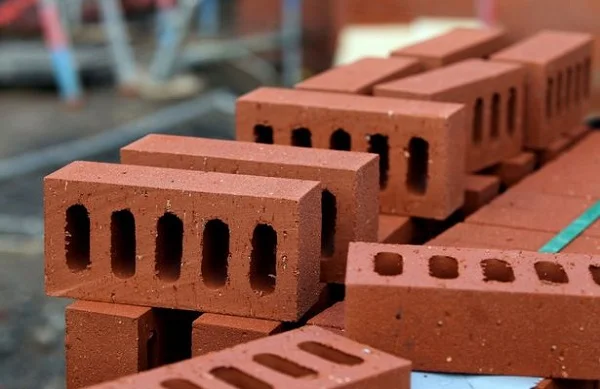
Comprehensive technical resources organized by category
Complete technical specifications for all brick types including dimensions, strength, absorption, and thermal properties.
View DetailsStandard testing procedures for compressive strength, water absorption, efflorescence, and durability tests.
View DetailsInformation on national (IS) and international (ASTM, BS) standards followed in our manufacturing process.
View DetailsComprehensive guidelines for proper brick laying, mortar mixing, jointing, and curing procedures.
View DetailsUseful tools including brick quantity calculator, mortar estimation, and project planning resources.
View ToolsDownloadable brochures, data sheets, technical papers, and research documents on brick technology.
View LibraryDetailed technical specifications for our complete product range
| Parameter | Standard Grade | Premium Grade | Test Standard |
|---|---|---|---|
| Compressive Strength | 10.5 N/mm² (Min) | 15.0 N/mm² (Min) | IS: 3495 (Part-1) |
| Water Absorption | 20% (Max) | 15% (Max) | IS: 3495 (Part-2) |
| Size Tolerance | ± 3% | ± 2% | IS: 1077 |
| Efflorescence | Slight | Nil | IS: 3495 (Part-3) |
| Thermal Conductivity | 0.6-0.8 W/mK | 0.5-0.7 W/mK | ASTM C177 |
| Parameter | Hollow Blocks | Solid Blocks | Test Standard |
|---|---|---|---|
| Compressive Strength | 4.0 - 5.0 N/mm² | 6.0 - 7.5 N/mm² | IS: 2185 (Part-1) |
| Water Absorption | 10% (Max) | 7% (Max) | IS: 2185 (Part-2) |
| Density | 1500-1800 kg/m³ | 1800-2100 kg/m³ | IS: 2185 |
| Drying Shrinkage | 0.06% (Max) | 0.04% (Max) | ASTM C426 |
| Thermal Conductivity | 0.7-1.1 W/mK | 0.5-0.8 W/mK | ASTM C177 |
Standard testing protocols followed in our quality control laboratory
Determines the load-bearing capacity of bricks under compression. Essential for structural applications.
Measures the percentage of water absorbed by bricks when immersed for 24 hours. Indicates durability.
Determines the presence of soluble salts that cause white deposits on brick surfaces.
Ensures uniform brick dimensions for proper alignment and reduced mortar consumption.
Measures heat transfer through brick material. Important for energy-efficient construction.
Evaluates brick durability under repeated freezing and thawing cycles in cold climates.
National and international standards followed in our manufacturing
Compliance with Bureau of Indian Standards specifications for various brick products.
Adherence to American Society for Testing and Materials standards for material quality.
Compliance with British Standards Institution specifications for construction materials.
Following International Organization for Standardization quality management systems.
Specification for common burnt clay building bricks used in construction.
Methods of tests of burnt clay building bricks for compressive strength and absorption.
Specification for concrete masonry units including hollow and solid blocks.
Specification for pulverized fuel ash lime bricks for use in construction.
Best practices for proper brick laying and construction
Proper site clearing, leveling, and marking. Ensure adequate foundation preparation with proper compaction and drainage. Mark layout using strings and levels for accurate alignment.
Soak bricks in water for adequate time (typically 6-12 hours) to prevent excessive water absorption from mortar. Prepare mortar mix with proper cement-sand ratio (1:4 to 1:6).
Start from corners and work towards center. Use spirit level for horizontal alignment. Maintain uniform joint thickness (typically 10mm). Apply mortar on bed and vertical joints.
Maintain staggered bonding pattern (typically English or Flemish bond). Check vertical alignment with plumb bob. Maintain consistent joint thickness throughout.
Proper joint finishing for weather resistance and aesthetics. Options include flush joint, struck joint, weathered joint, or concave joint. Use proper tools for uniform finish.
Proper curing of brickwork for minimum 7 days. Protect from rapid drying, rain, and frost during initial setting period. Maintain moisture for proper cement hydration.
Downloadable technical documents and resources
Complete product catalog with specifications, sizes, and technical data for all our brick products.
Download PDFDetailed technical data sheets for each product category with performance specifications.
DownloadComprehensive installation manual with step-by-step procedures and best practices.
DownloadExcel-based calculator for estimating brick and mortar quantities for your projects.
Use CalculatorTechnical comparison charts showing differences between various brick types and grades.
DownloadFrequently asked technical questions about brick properties, selection, and installation.
View FAQOur technical team is available to provide expert guidance, specifications, and support for your construction projects. Contact us for customized technical solutions.